

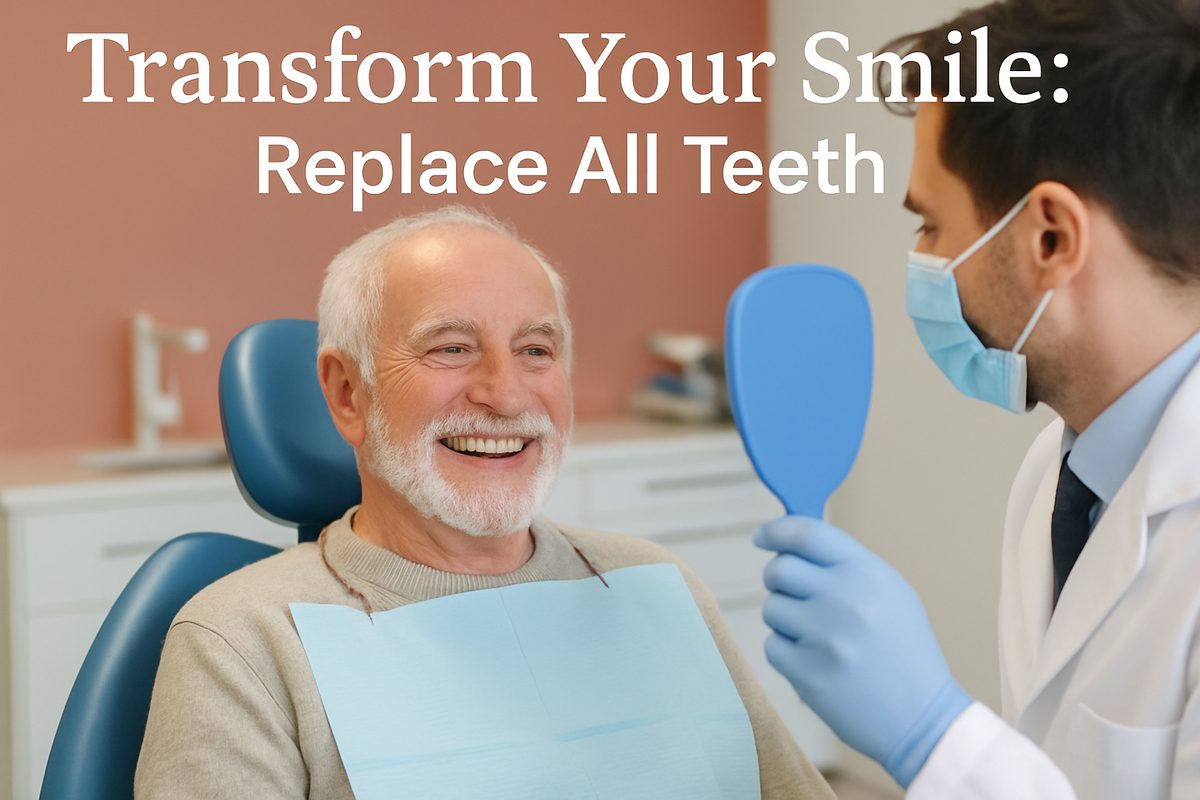
Many people wonder when and why someone would choose to replace all teeth. This post explains, in simple terms, why some patients replace all teeth, what full-mouth options exist, and what to expect during treatment. The goal is to make the process understandable and reassuring so you can decide if a full-arch plan is right for you.
When You Might Need To Replace All Teeth
You might consider a plan to replace all teeth in The Bronx if you have widespread decay, advanced gum disease, failing dentures, severe trauma, or long-standing tooth loss that makes chewing or speaking difficult. Replacing all teeth can restore function and reduce ongoing pain or infections. Your provider will evaluate overall health, bone levels, and oral hygiene before recommending a full-mouth approach.
Common Options To Replace All Teeth
Full-arch dental implants (fixed)
Fixed implant bridges or full-arch zirconia restorations attach to multiple implants and act like natural teeth. They feel stable, let you chew normally, and often last many years with proper care. Materials like zirconia resist staining and are strong for long-term use.
All-on-4 or All-on-X approaches
All-on-4 and All-on-X use fewer implants strategically placed to support a full arch. These approaches often avoid extensive bone grafts, can shorten recovery, and may allow temporary teeth on the same day as surgery. They are a good choice when bone volume is limited or when patients want faster return to function.
Removable implant-supported dentures
Removable solutions snap onto implants for better stability than traditional dentures but can be taken out for cleaning. They cost less than fixed bridges but require daily removal and maintenance. The trade-off is often lower upfront cost for slightly less natural feel and convenience.
What To Expect During The Process To Replace All Teeth
Initial exam and planning
Expect a full oral exam with digital X-rays or CBCT imaging, photos, and a detailed plan. Providers will decide if extractions, bone grafts, or gum treatment are needed before implants. Clear planning helps reduce surprises and improves outcomes.
Surgery and temporary teeth
Implant surgery places titanium posts into the jaw. Many patients receive temporary teeth the same day so they leave the office with functional teeth. Recovery usually involves swelling and mild discomfort managed with medication and rest.
Final restoration and follow-up
Final crowns or bridges are placed after healing, typically 3–6 months. Your dentist will make adjustments, check bite, and schedule routine visits to monitor healing and hygiene.
Benefits And Risks Of Choosing To Replace All Teeth
Benefits include improved chewing, clearer speech, better appearance, and reduced infection risk. Risks include infection, implant failure, and the need for additional procedures like grafts. Good outcomes come from careful planning, sterile technique, and close follow-up care.
Cost, Insurance, And Financing Options
Costs vary by number of implants, choice of materials (titanium vs. zirconia), and extra procedures. Some dental plans may cover parts of treatment; many practices offer financing or payment plans to spread cost over time.
How To Choose The Right Doctor To Replace All Teeth
Look for experience with full-arch implants, clear treatment plans, before-and-after photos, and strong patient communication. Ask about technologies like CBCT imaging and digital planning to improve precision.
About Dental Group NY & Dr. Benjamin Katayev
Dental Group NY serves The Bronx and Queens with full implant care led by Dr. Benjamin Katayev. Dr. Katayev trained at NYU and continues advanced education in implant and restorative dentistry. The practice uses digital imaging, zirconia restorations, and laser dentistry to improve comfort and outcomes.
Next Steps If You Want To Replace All Teeth
If you’re ready to learn more or want to replace all teeth in The Bronx, schedule a consultation. Bring any recent dental records or X-rays and be prepared to ask about timeline, costs, recovery, and financing. A clear plan and open communication will help you move forward with confidence.
